Zion wildlife, and how close you may get
Zion holds around 370 vertebrate species, and most visitors see four of them. This page covers the ones worth looking for, where the park says they actually are, and the distance rules, including the place where the park's own guidance contradicts itself.
- Condors in Arizona and Utah
- About 70
- Bighorn, 1978 to 2018
- 14 to 500+
- Keep back from large animals
- 100 feet
- Venomous snakes in Zion
- One
Around seventy condors in two whole states
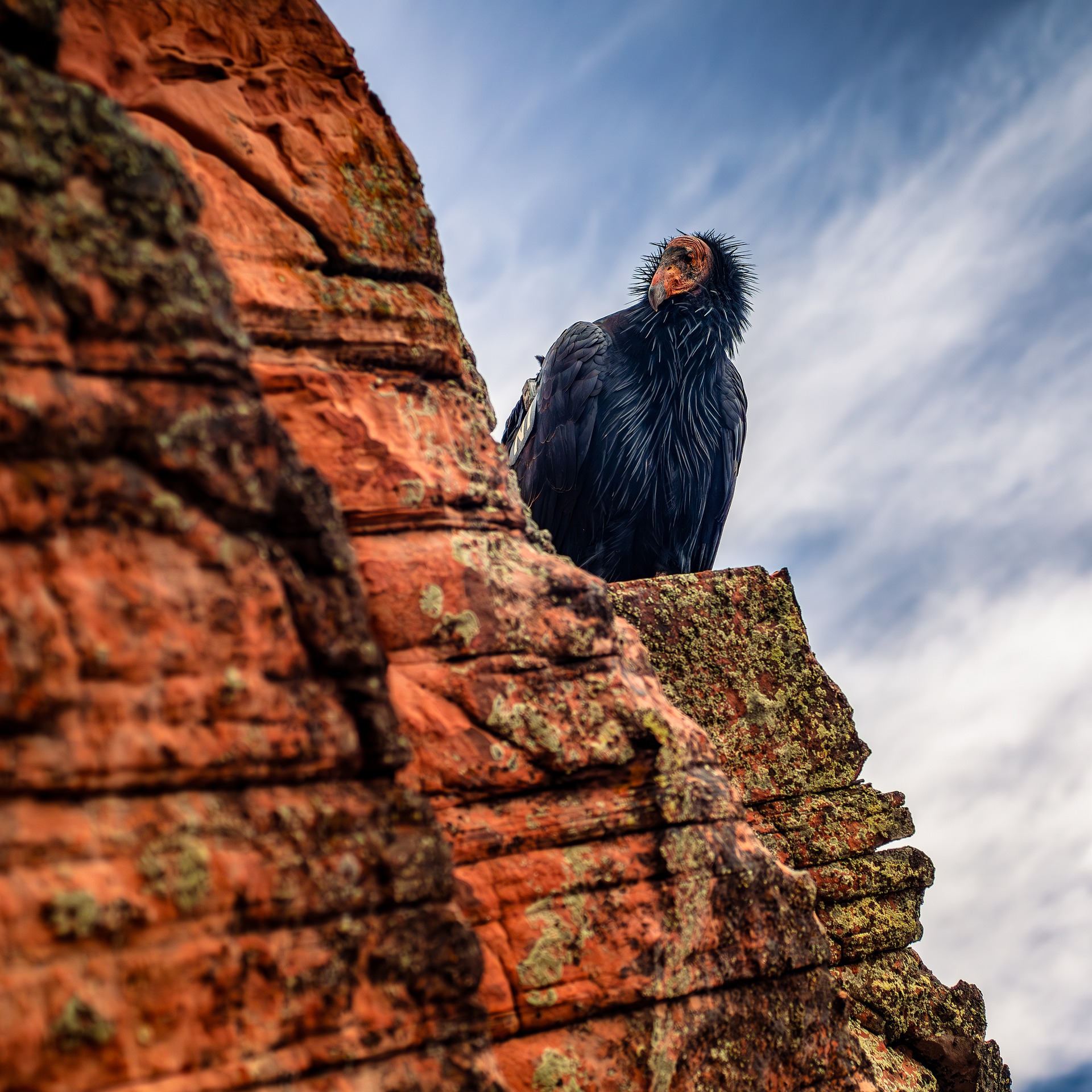
The California condor is the largest flying land bird in North America, with a wingspan the park gives as nine and a half feet. In 1982 there were 22 left alive anywhere.
The world population now sits around 400, roughly half of them flying free, and about 70 of those live across Arizona and Utah.
Which makes the next fact remarkable. The park does not say condors are occasionally reported. It says visitors frequently see them, and it names the two places:
- Perched on or soaring above Angels Landing. If you hold a permit and you are up there on a clear morning, look out rather than down. How the permit works.
- Kolob Terrace Road near Lava Point. A quiet road most visitors never drive, which is part of why it works.
Birds were released at the Vermilion Cliffs in northern Arizona and ranged out from there into southern Utah. Pairs mate for life and produce a single egg every other year, which is why recovery is measured in decades rather than seasons.
Every wild bird wears a number, and the park wants it
Each condor flying free carries a numbered wing tag so biologists can track individuals. If you see one, note the tag number and report it to park staff. That is a genuinely useful thing a visitor can do, and it takes ten seconds. Do not approach the bird and do not offer it food.
The thing that still kills them is lead. The park names lead poisoning as the biggest threat facing the recovery of the California condor, because condors are scavengers and they eat the remains of animals shot with lead bullets. It is not a habitat problem or a disturbance problem. It is ammunition.
Bighorn sheep live on the east side, and only there
The park is specific: you are most likely to see bighorn between the Zion Mount Carmel Tunnel and the East Entrance.
That is a short, named stretch of road, and it is the single most reliable large animal sighting in Zion. It is also nowhere near the shuttle. If bighorn matter to you, you need a car and the drive through the tunnel. The tunnel, its size limits and the permit.
The recovery behind that is worth knowing. Desert bighorn were locally extinct in Zion by the mid 1900s. The Park Service and Utah Division of Wildlife Resources put 14 animals back into the Zion wilderness by 1978, and the herd had grown to over 500 by 2018.
Desert bighorn are not the animal most people picture. Compared with Rocky Mountain bighorn they are smaller bodied, longer legged and shorter coated, built for heat and steep rock rather than snow.
Why a success story is now a management problem
Park biologists are concerned about high population density. As the herd spreads into new country it has a greater chance of contact with domestic sheep and goats, which carry diseases that are fatal to wild bighorn. The park says it is studying whether action is needed.
One hundred feet, and they will not move
Bighorn beside a road do not behave like a nervous animal, which is exactly what makes people creep closer. They are on the 100 foot list. Watch from the vehicle or from a pullout and do not close the gap.
The park publishes two different minimum distances
This is not a criticism, it is a thing you should know before you rely on a number you half remember from a sign.
| Where it is published | Distance | Applies to |
|---|---|---|
| Wildlife viewing safety page | 100 ft | Deer, bighorn sheep, California condors, mountain lions |
| Wildlife viewing safety page | 50 ft | Squirrels, birds, reptiles |
| Encountering wildlife page | 25 ft | Stated as a general minimum, with instructions to back away and keep it |
Use the larger number
Both pages are the park's own. We are not going to pretend one of them does not exist, and we are not going to guess which is current. Work to 100 feet from deer, bighorn, condors and mountain lions and 50 feet from everything else, and you are inside every figure the park publishes. Verified September 2026.
There is a better test than any of the numbers, and it is also the park's, from the encountering wildlife page:
If you are watching an animal and it notices you, or changes its behavior because of your activities, you are too close.
That one sentence does more work than a tape measure. A mule deer that lifts its head and stares at you has already told you the answer.
Feeding an animal here is how it ends up dead
Feeding wildlife is prohibited in Zion, and the reason is not tidiness.
It kills the squirrel
The park states plainly that human food is hard for rock squirrels to digest and that feeding them has led to several squirrel fatalities. The animal that takes your crisp does not get a treat, it gets a slow problem.
Then it kills the next one
Animals that learn to associate people with food become bold, then aggressive. The park is explicit that wildlife may face euthanasia when they become aggressive. Someone else feeds it, the park has to destroy it.
And it can hurt you
The park names tetanus, rabies, plague and hantavirus among the risks. Rock squirrels are approachable and they bite. A hand held out with food is the classic way to get bitten in this park.
The rule almost nobody knows
Calling, clicking, whistling or making noises of any kind to attract wildlife is illegal. Not discouraged, illegal. Every photographer trying to make a deer lift its head should read that twice. Guided photography in Zion.
Two more practical points from the park. Store all food properly, in a bear box, a vehicle with the windows up, or a secure hard sided container, which matters most if you are camping at Watchman. And a fawn on its own has almost certainly not been abandoned. Leave it alone, do not feed it, do not pet it, do not try to catch it.
Dogs are part of this too. Pets are barred from every Zion trail except Pa’rus and from both shuttle lines, and a dog off a lead among deer is a wildlife problem rather than a dog problem. Zion with a dog.
Most of Zion’s wildlife is under a foot long
The park counts 291 bird species and around 370 vertebrate species in total. Almost none of them are the four animals people photograph.
| What | The number | Worth knowing |
|---|---|---|
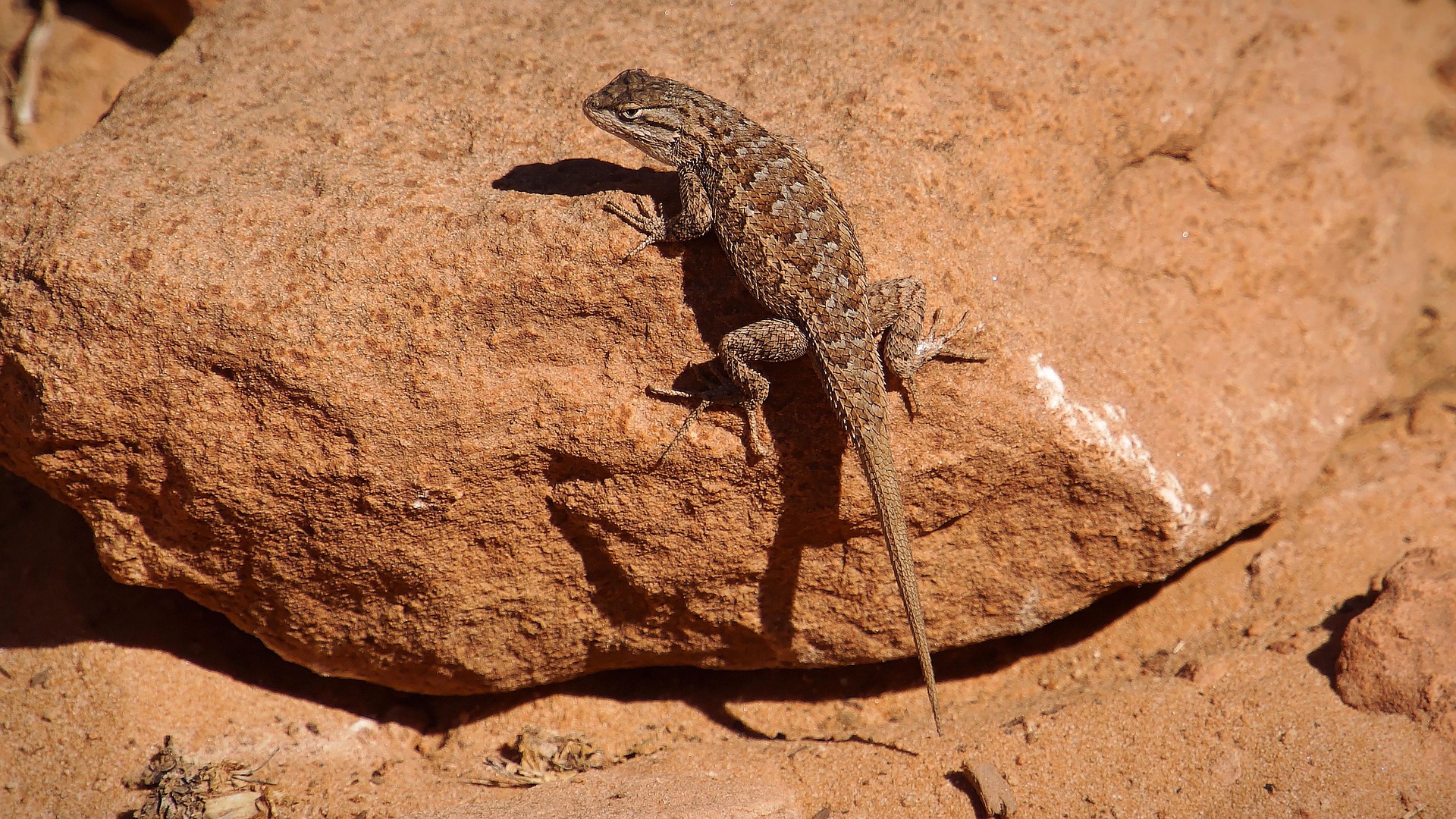
| Lizards | 16 species | The ones basking on warm rock in spring and autumn. A collared lizard reaches around 14 inches; a western whiptail runs at 9 to 10 miles an hour |
| Snakes | 13 species | One is venomous, the Great Basin rattlesnake. A gopher snake can reach 92 inches and is harmless |
| Desert tortoise | Present | The park’s instruction is simply to watch from a distance and enjoy it |
| Mexican spotted owl | Federally threatened since 1993 | Zion’s slot canyons give it the cool, moist, shaded conditions it would otherwise get from old growth forest. The park monitors 15 nest sites and says there are more |
| Zion snail | Physa zionis | Endemic. It lives in the hanging gardens on seeping canyon walls and nowhere else on earth |
| Virgin spinedace | In the river | Zion has 8 fish species, and three are found only in the Virgin River system |
One venomous snake, and a slow one
The Great Basin rattlesnake is the only venomous snake in Zion. The park gives its strike speed as 9.6 feet per second, which sounds alarming and is the reason the advice is about distance rather than reaction. Give it room and walk around it. Most snakes you see here are not it.
Why you see nothing at midday
Reptiles brumate for four or five months a year and shelter from heat the rest of the time, and many mammals are nocturnal. Early morning and the last hour of light are when the park is actually occupied. That is the same window that works for hiking and for photographs.
A counting note
The park publishes two different mammal totals, 68 on its mammals page and 78 or more on its animals page. We have used neither as a headline figure because we cannot tell which is current. The point stands either way: there is far more here than deer and squirrels.
Nesting birds close twelve cliffs every spring
This is the point where Zion wildlife stops being scenery and starts deciding what you can book.
Climbing routes on cliffs used by nesting peregrine falcons close from March 1 through mid to late summer, every year. All peregrine closures lift on August 1. The park lists the cliffs by name, and the list is not marginal terrain:
Cable Mountain, Isaac in the Court of the Patriarchs, Mount Kinesava, Tunnel Wall, The Streaked Wall, The Sentinel, Mount Spry, East Temple, Mountain of the Sun, North Twin Brother, The Great White Throne, and the Angels Landing climbing routes.
If disturbed, the nesting pair may abandon the site and not nest again until the following year. One party on one route can cost a season.
California condors, as a federally endangered species, also drive closures. Between the two, a spring climbing trip to Zion needs the current closure list before it needs anything else. What climbing in Zion actually involves, and the permits behind it.
It fits the pattern this whole site keeps running into. Access in Zion is decided by rules that are published, specific, and almost never mentioned on a booking page.
Common questions about Zion wildlife
What wildlife will I actually see in Zion?
Most visitors see mule deer and rock squirrels on the canyon floor, birds throughout, and lizards on warm rock. California condors are frequently seen above Angels Landing and near Lava Point, and bighorn sheep on the east side between the tunnel and the East Entrance.
Where can I see California condors in Zion?
The park names two places: perched on or soaring above Angels Landing, and on Kolob Terrace Road near Lava Point. There are only about 70 condors across Arizona and Utah, so this is a genuinely specific tip rather than a general one.
Where are the bighorn sheep in Zion?
Between the Zion Mount Carmel Tunnel and the East Entrance, on the steep rocky ground of the east side. No shuttle goes there, so seeing them means driving through the tunnel.
How close can you get to wildlife in Zion?
The park's wildlife viewing safety page gives 100 feet for deer, bighorn sheep, condors and mountain lions, and 50 feet for squirrels, birds and reptiles. Its encountering wildlife page gives a general minimum of 25 feet. Work to the larger figures and you are inside every rule the park publishes.
Is it illegal to feed animals in Zion?
Yes. Feeding wildlife is prohibited, and so is calling, clicking or whistling to attract it. Feeding also kills the animal: the park says human food is hard for rock squirrels to digest and has caused several squirrel deaths, and animals that turn aggressive may be euthanised.
Are there rattlesnakes in Zion?
Yes, one species. The Great Basin rattlesnake is the only venomous snake in the park, among 13 snake species. Give it distance and walk around it.
Why do Zion climbing routes close in spring?
Nesting peregrine falcons. Routes on twelve named cliffs close from March 1 through mid to late summer, with all peregrine closures lifting on August 1. A disturbed pair may abandon the nest and not breed again until the next year.
Now fit it into an actual day
Condors want an Angels Landing permit or a drive up Kolob Terrace. Bighorn want the tunnel. Neither happens by accident.
Also useful: photography tours, the hikes and when animals are actually out.
100 feet from deer, bighorn, condors and lions. 50 from everything else.
Plan your trip